


Fill out our script request form so we can send you a script to peruse and more info about what these translations look like in production.
“[the translation of Much Ado is] a play full of joy, pain, sass, and grit—full of theatrical potential. It’s an exciting conversation between the worlds of William Shakespeare and Ranjit Bolt.” Ben Spiller, artistic director
Playwright

Ranjit Bolt
Ranjit Bolt was educated at The Perse School, Cambridge, and at Balliol College, University of Oxford. He workedas an investment analyst and adviser for eight years, before concentrating on theatre translation from the end of 1990. His acclaimed translations for the theatre include works by Molière, Seneca, Sophocles, Corneille, Beaumarchais, Brecht, Goldoni, and Zorilla. He was awarded an OBE for his services to literature in 2003.
Dramaturg

Lydia G. Garcia
In addition to her dramaturgical work, Lydia Garci is the Denver Center for the Performing Arts first-ever Executive Director of Equity and Organization Culture. Lydia was a resident lecturer and teacher at the Oregon Shakespeare Festival, where she dramaturged more than 20 plays in 8 seasons including the world premieres of Sean Graney’s The Yeomen of the Guard, Alexa Junge’s Fingersmith, Tracy Young and Oded Gross’s The Imaginary Invalid and The Servant of Two Masters, and Octavio Solis’s Quixote.
She is also a trained staff facilitator for issues of diversity, inclusion, and equity. She holds a BA in English and American Literature and Language from Harvard University and an MFA in Dramaturgy and Dramatic Criticism from the Yale School of Drama, and is a member of the Literary Managers and Dramaturgs of the Americas (LMDA).
In Print
Much Ado About Nothing
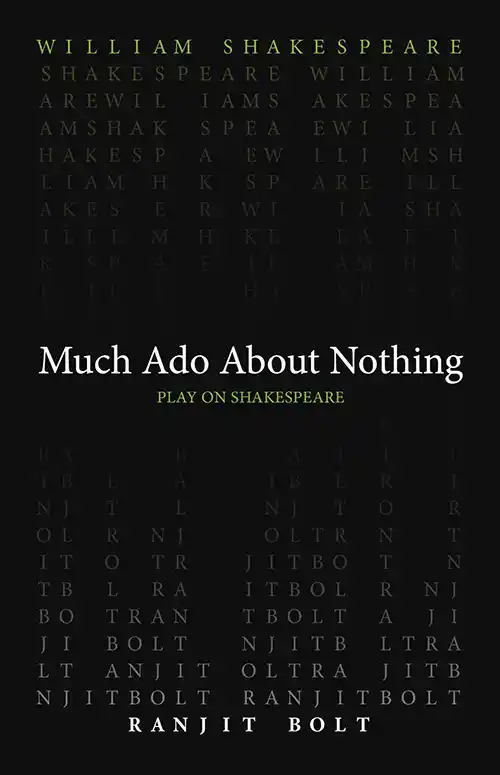
Ranjit Bolt updates Much Ado About Nothing with a merry new translation.
In Much Ado About Nothing, a series of miscommunications and misunderstandings spiral out of control, leaving two sets of lovers to untangle their words and their hearts. Ranjit Bolt, an accomplished translator, takes on Shakespeare’s well-loved comedy to update much of the obscure language while maintaining the humor, characterization, and wit that audiences know and love. For modern readers, Beatrice, Benedick, Hero, and Claudio are just as enchanting as always—and perhaps funnier than ever before.