


Fill out our script request form so we can send you a script to peruse and more info about what these translations look like in production.
Playwright Lillian Groag says the play “struck me as arguably Shakespeare’s most shockingly ‘modern’ play. One feels the chill of an immediately recognizable 21st-century cynicism, which doesn’t stop at an indictment of war but goes further to a devastating indictment of the human heart itself. There is a sense that nothing lasts, that nothing takes root. Nothing is given. Not friendship, loyalty, love, or honor. What might be a feasible conduct of life without honor?”
Playwright
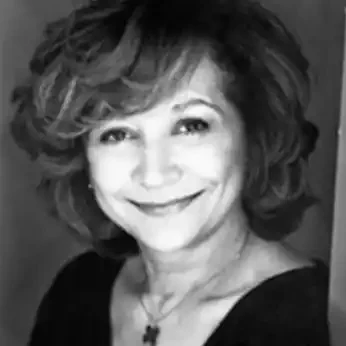
Lillian Groag
Lillian Groag works in the theatre as an actress, playwright and director. Her acting credits include Broadway, Off Broadway, Mark Taper Forum, and regional theatres throughout the country. She has directed at the Oregon Shakespeare Festival, the Old Globe Theatre, Actors Theatre of Louisville, Mark Taper Forum’s Taper Too, New York City Opera, Chicago Opera Theatre, Boston Lyric Opera, Florida Grand Opera, Center Stage, The People’s Light and Theatre Company, Berkeley Repertory, Milwaukee Repertory, Missouri Repertory, Seattle Repertory, Glimmerglass Opera, Asolo Repertory Theatre, San Jose Repertory, A.C.T. in San Francisco, The Juilliard School of Music, Florentine Opera, Kentucky Opera, Arizona Opera, the Sundance Institute Playwrights’ Lab, the Virginia Opera, Opera San Jose and the Company of Angels. Her plays The Ladies Of The Camellias, The White Rose (AT&T award for New American Plays), The Magic Fire (Kennedy Center Fund for New American Plays), Menocchio and Midons have been produced variously by the Old Globe Theatre, Oregon Shakespeare Festival, The Kennedy Center, The Guthrie Theater, Berkeley Repertory Theatre, Yale Repertory, Denver Center, The Shaw Festival, Alabama Shakespeare Festival, the Northlight Theatre, the WPA Theatre, Seattle Repertory, the Asolo Theatre, The Wilma Theatre, The People’s Light and Theatre Company, and The Shaw Festival. Abroad: Mexico City, Junges Theatre in Bonn, Landesbuhne Sachsen-Anhalt in Eisleben, Shauspielhaus in Wuppertal, Hessisches Landestheater in Marburg, Shauspielhaus in Stuttgart, Teatro Stabile di Bolzano, (National Tour) in Italy, and Tokyo. She has done translations and adaptations of Lorca, Feydeau, Musset, Marivaux and Molnàr, produced at the Guthrie, the Mark Taper Forum Taper II, and Missouri Rep (now Kansas City Rep). She is an Associate Artist of the Old Globe Theatre. The Ladies Of The Camellias, Blood Wedding, The White Rose and The Magic Fire have been published by Dramatists Play Service. Up coming: A Nervous Splendour, adaptation, from Frederic Morton’s book, Flypaper, new play. Master’s and PhD degrees from Northwestern University in Romance Languages and Literature, Theatre Thesis, and an Honorary PhD from Lake Forest College.
Dramaturg

James Magruder
James Magruder (Dramaturg, Troilus and Cressida) is a playwright, translator, and fiction writer. His adaptations of Gozzi, Moliére, Marivaux, Hofmannstahl, Lesage, Labiche, Giraudoux, Sidney, and Dickens have been performed on and off-Broadway, at regional theaters across the United States, and in Germany, England, and Japan. He has published four books of fiction (Sugarless, Let Me See It, Love Slaves of Helen Hadley Hall, and Vamp Until Ready) and wrote, or co-wrote, the books to the Broadway musicals Triumph of Love and Head Over Heels. His first—and last—work of non-fiction, a chronicle of the first fifty years of Yale Repertory Theatre, will be published by Yale University Press in 2023. He lives in Baltimore and has taught at Swarthmore College, Princeton University, and Yale School of Drama.
In Print
Troilus and Cressida
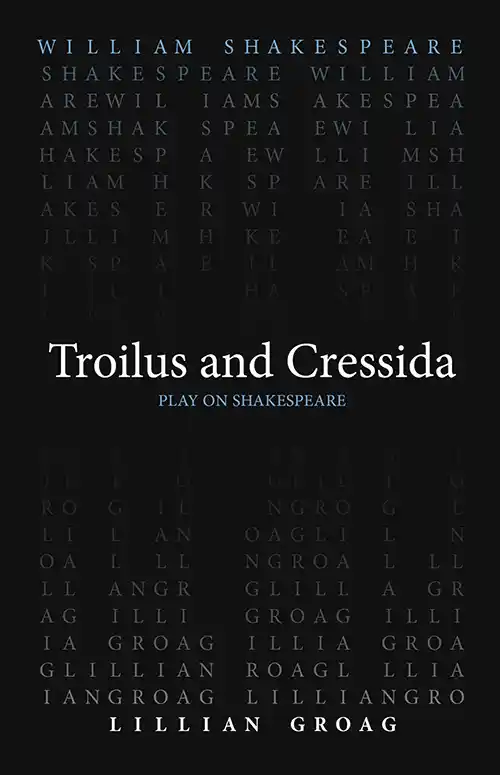
Lillian Groag presents a new version of Troilus and Cressida that will resonate with contemporary audiences.
One of the most obscure plays in Shakespeare’s canon, Troilus and Cressida may also be the Bard’s darkest comedy. Exploring some of the events of Homer’s Iliad, the play juxtaposes the carnage of the Trojan War with a love story between its two titular characters. Lillian Groag’s translation brings this ancient world to modern audiences. Replacing the archaisms with new and accessible phrasing, Shakespeare’s lines regain their meaning and humor in the twenty-first century. This translation illuminates Troilus and Cressida as one of Shakespeare’s funniest, saddest, and most bitterly modern plays.