

Fill out our script request form so we can send you a script to peruse and more info about what these translations look like in production.
“Beneath all the crusty gags, this play is about courage and authenticity, and it knows that these things are rare. The clowns aren’t, as it first appears, Kate and Petruchio. By the end, it’s everyone else. And this, I think, is the secret of the play’s enduring appeal, in spite of its crudeness and its enduring misogynist tropes.” Amy Freed, Playwright
Playwright
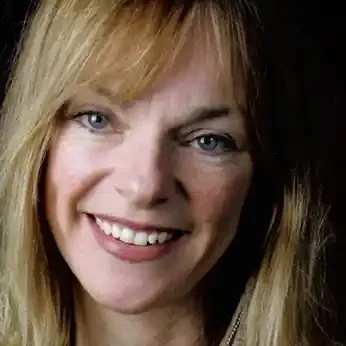
Amy Freed
Amy Freed is the author of Shrew! ,The Monster Builder, Restoration Comedy, The Beard of Avon, Freedomland, Safe in Hell, The Psychic Life of Savages, You, Nero and other plays. Her work has been produced at South Coast Repertory Theater, Seattle Repertory, American Conservatory Theater, Yale Rep, California Shakespeare Theater, Berkeley Rep, the Goodman, Playwrights’ Horizons, New York Theater Workshop, Woolly Mammoth, Arena Stage and other theaters. Playwriting awards include Charles MacArthur Award, Joseph Kesselring Prize, LA and Bay Area Critics’ Circle Awards, Pulitzer Prize Finalist (Freedomland). She currently serves as Artist-in-Residence at Stanford University in the Theater and Performance Studies Department.
Dramaturg

Drew Lichtenberg
Dr. Drew Lichtenberg is a writer, teacher, adaptor, and dramaturg. Over his 15 year career, he has worked on more than 55 productions, collaborating with artists such as Rebecca Taichman, Ellen Mclaughlin, Whitney White, and Yaël Farber, working on plays by James Baldwin and Lorraine Hansberry in addition to Shakespeare. Selected international and New York credits include Hansberry’s Les Blancs, Salomé (dir. Yaël Farber, Royal National Theatre); Hansberry’s The Sign in Sidney Brustein’s Window (Brooklyn Academy of Music/Lorraine Hansberry Literary Trust), Priestley’s Time and the Conways (dir. Rebecca Taichman, Roundabout Theatre Company); Macbeth (dir. Moisés Kaufman, New York Shakespeare Festival); and the adaptation and translation of Ernst Toller’s Hoppla, We’re Alive! (dir. Zishan Ugurlu, La Mama). Regionally, he has worked with Play On! at OSF, the McCarter Theatre Center at Princeton University, Woolly Mammoth Theatre Company, Baltimore Center Stage, Williamstown Theatre Festival, Yale Repertory Theatre, and has served as Resident Dramaturg over 11 seasons at the Shakespeare Theatre Company in Washington, D.C. His dramaturgical writings have been published at Lincoln Center Theatre, the Old Globe, and ACT and his criticism has appeared in Theater, Theatre Journal, and Contemporary Theatre Review. He is the author of a monograph, The Piscatorbühne Century (Routledge, 2021) and a forthcoming book on the Shakespeare Theatre Company for the Arden Series. He has taught courses at the Catholic University of America, David Geffen School of Drama at Yale University, and Eugene Lang College of the Liberal Arts at the New School, served on arts funding panels for the Baltimore Cultural Alliance and the D.C. Commission for the Arts, and served as an undergraduate mentor at the Kennedy Center’s American College Theatre Festival. He is the recipient of a Master of Fine Arts and Doctorate of Fine Arts in Dramaturgy and Dramatic Criticism from Yale School of Drama. He is the proud partner of Rebecca Ende Lichtenberg and parent of Dylan and Noah Lichtenberg.
In Print
The Taming of the Shrew
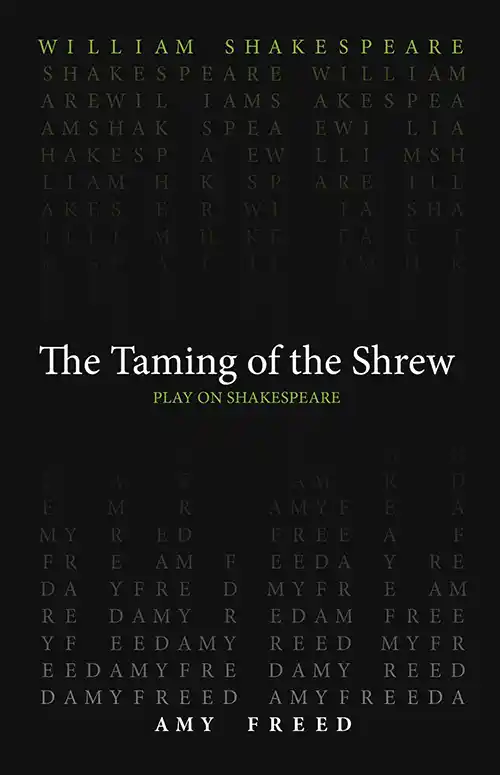
Amy Freed rewrites The Taming of the Shrew, one of the more problematic plays in the Shakespeare canon.
While beloved for its sharp dialogue and witty banter, The Taming of the Shrew offers a problematic storyline that many have deemed misogynistic. The play contains insensitive gags and uneasy politics, making it difficult for modern audiences to connect with the text. Amy Freed’s new translation reactivates the original story, blowing away the dust and cobwebs. As Freed’s text reminds us, at its heart The Taming of the Shrew is a story about courage and authenticity.