

Fill out our script request form so we can send you a script to peruse and more info about what these translations look like in production.
“My understanding of the plays and characters had deepened through the action of the translation… In the process of discovering what I did not know, and digging into the text to transpose the incomprehensible into the comprehensible, I fell deeper in love with the language, the characters and their stories… The stated purpose of the Play On project is to enhance the understanding of Shakespeare’s plays in performance; my journey with the Henry’s served that purpose for me, and my small hope is that my illumination can be shared with others who love this work as I do.” Yvette Nolan
Playwright
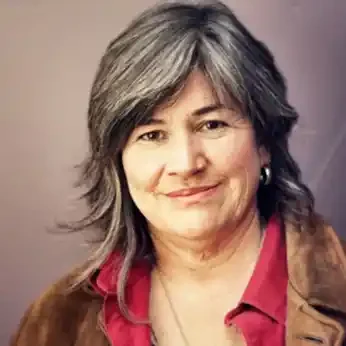
Yvette Nolan
Yvette Nolan (Algonquin) is a playwright, director, and dramaturg. Plays include BLADE, Annie Mae’s Movement, The Birds (a modern adaptation of Aristophanes’ comedy), The Unplugging, Gabriel Dumont’s Wild West Show (co-writer), the libretto Shanawdithit. Directing credits include Bearing (w. Michael Greyeyes, Signal Theatre at Luminato), The Piano Teacher by Dorothy Dittrich (Arts Club), In Care by Kenneth T Williams (Gordon Tootoosis Nikaniwan Theatre), Thicker Than Water by Heather Morrison (Sum Theatre), Nôhkom by Michael Greyeyes, Bearing(Signal), Salt Baby by Falen Johnson (Globe), Map of the Land, Map of the Stars (w. Michelle Olson), Café Daughter by Kenneth T Williams, Justice by Leonard Linklater (Gwaandak), Death of a Chief, A Very Polite Genocide by Melanie J. Murray, Marie Clements’ Tombs of the Vanishing Indian and The Unnatural and Accidental Women (Native Earth), The Ecstasy of Rita Joe(Western Canada Theatre/National Arts Centre), The Only Good Indian… , The Triple Truth (Turtle Gals). As a dramaturg, she works across Turtle Island on projects including Queen Seraphina and the Land of Vertebraat and Ultrasound by Adam Pottle, Many Fires by Charlie Peters, Ecstasy (film) by Cara Mumford, Little Badger and the Fire Spirit by Maria Campbell, Confluence by Raven Spirit Dance, A History of Breathing by Daniel Macdonald, The Glooskape Chronicles by Donna Loring. From 2003-2011, she served as Artistic Director of Native Earth Performing Arts. Her book Medicine Shows about Indigenous theatre in Canada was published by Playwrights Canada Press in 2015, and Performing Indigeneity, which she co-edited with Ric Knowles, in 2016. She is an Artistic Associate of Signal Theatre.
Dramaturg
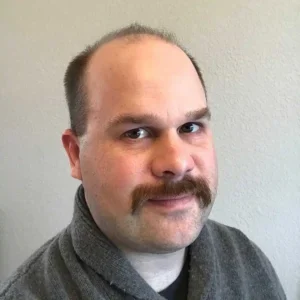
Waylon Lenk
Waylon Lenk is an Oregon-based dramaturg and grant writer. Recent artistic projects have been as a consultant on a film in pre-production by Bad Robot, the dramaturg on Yvette Nolan’s English-to-English translations of Shakespeare’s Henry IV, and as a dramaturg on Randy Reinholz’s Off the Rails at the Oregon Shakespeare Festival. Lenk has also presented work at the Many Nations Longhouse at the University of Oregon, the Native American Longhouse Eena Haws at Oregon State University, Portland Public Schools, the Oregon Museum of Science and Industry, and the Piggyback Fringe Festival. He holds a Ph.D. in Theatre Arts from the University of Oregon, an M.F.A. in Dramaturgy from Stony Brook University, and a B.A. in Theatre and German Studies from Lewis & Clark College.
In Print
Henry IV Part 2
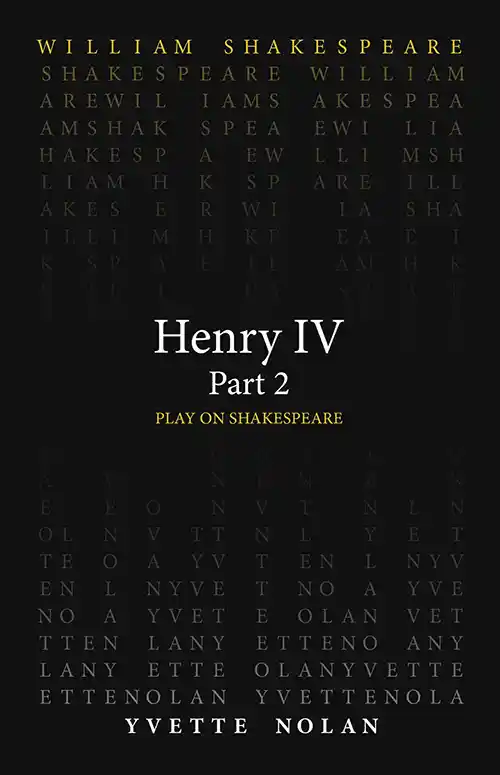
The two-part tale of King Henry IV, rewritten with new language for the twenty-first century.
Shakespeare’s two Henry IV plays follow the exploits of King Henry IV after usurping the crown from his cousin Richard II. Featuring some of Shakespeare’s most recognizable characters such as Prince Hal and the roguish Sir John Falstaff, Henry IV, Part 1 delves into complicated questions of loyalty and kingship on and off the battlefield. Henry IV, Part 2 follows Prince Hal as he grapples with his eventual ascent to the throne and his increasingly strained relationship with Falstaff. As the king falls sick and Hal’s ascent appears imminent, Hal’s decisions hold significant implications for all those around him. Modernizing the language of the two plays, Yvette Nolan’s translation carefully works at the seeds sown by Shakespeare—bringing to new life the characters and dramatic arcs of the original.