


Fill out our script request form so we can send you a script to peruse and more info about what these translations look like in production.
Director Lisa Peterson began her translation journey with Hamlet after staging the play at the Oregon Shakespeare Festival in 2016. Her work uplifts the comedic and historical elements of the play that are otherwise often cut from production. She says the project felt like, “I was given the greatest of gifts: the assignment to paint along the lines of a masterpiece, and by doing that, to learn and feel the genius behind the art… Like a theatrical chiropractor, I got to feel every contour, every know, every hard edge. And I got to make the smallest of adjustments, subtly shifting the alignment so that this glorious creature can walk just a little more easily.”
Playwright
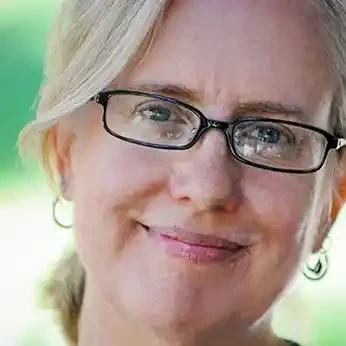
Lisa Peterson
Recent NY credits include An Iliad, written with Denis O’Hare (NYTW- 2012 Obie Award, Lortel Award, Drama Desk nominations); Shipwreckedby Donald Margulies and Motherhood Outloud by 15 writers (Primary Stages); The Trestle at Pope Lick Creek by Naomi Wallace, Slavs! (Thinking About the Longstanding Problems of Virtue and Happiness) by Tony Kushner, Traps by Caryl Churchill, The Waves adapted from Virginia Woolf by Peterson and David Bucknam (Drama Desk nominations) and Light Shining in Buckinghamshire by Caryl Churchill (Obie Award for Directing), all at New York Theatre Workshop; The Fourth Sister by Janusz Glowacki and The Batting Cage by Joan Ackerman (Vineyard Theatre); The Poor Itchby John Belluso, The Square by 16 writers, and Tongue of a Bird (The Public); Collected Stories by Donald Margulies (MTC); Birdy adapted from the William Wharton novel by Naomi Wallace (Women’s Project); The Chemistry of Change by Marlane Meyer (Playwrights Horizons/WPP); The Model Apartment by Donald Margulies (Primary Stages); and Sueno by Jose Rivera (MCC). Lisa has directed regionally at the Mark Taper Forum (where she was Resident Director for 10 years), La Jolla Playhouse (Associate Director for 3 years), Guthrie, Berkeley Rep, Seattle Rep, Arena Stage, McCarter, Actors’ Theater of Louisville, Hartford Stage, Long Wharf, Yale Rep, Baltimore Center Stage, Huntington, Dallas Theater Center, Oregon Shakespeare Festival and California Shakespeare Theater. She is a Usual Suspect at NYTW, a member of Ensemble Studio Theater, and on the executive board of SDC.
Dramaturg

Luan Schooler
Luan Schooler is the Director of New Play Development & Dramaturgy at Artists Repertory Theatre in Portland, Oregon. Since starting there in 2015, she has initiated projects with Yussef El Guindi, Larissa FastHorse, Linda Alper, Andrea Stolowitz, Dael Orlandersmith, Hansol Jung, Anthony Hudson, and Susannah Mars. Before joining Artists Rep, she was Literary Manager/Dramaturg at Berkeley Rep for several years, and worked with many writers including David Edgar, Naomi Iizuka, Salman Rushdie, Dominique Serrand, Rinde Eckert, Lillian Groag, Bridget Carpenter, and Robert Fagles. While at Berkeley Rep, she served as production dramaturg on many productions, including with Lisa Peterson on Shakespeare’s Antony & Cleopatra. At OSF, she provided dramaturgy during two seasons, including on David Edgar’s Continental Divide, a project so large it required three dramaturgs: Lue Douthit, Douglas Langworthy, and Luan Schooler. (Interesting side note: the collective noun is ‘aggravation’, as in, “an aggravation of dramaturgs”.) Prior to all these experiences, she was a company member of Perseverance Theatre in Juneau, Alaska for many years. There, she learned what makes plays tick by working with artists like Paula Vogel, John Murrell, Molly Smith, Per Olav Sorensen, Pavel Dobrusky, John Luther Adams, and many others.
World Premier
Sunderland, UK
In Print
Hamlet
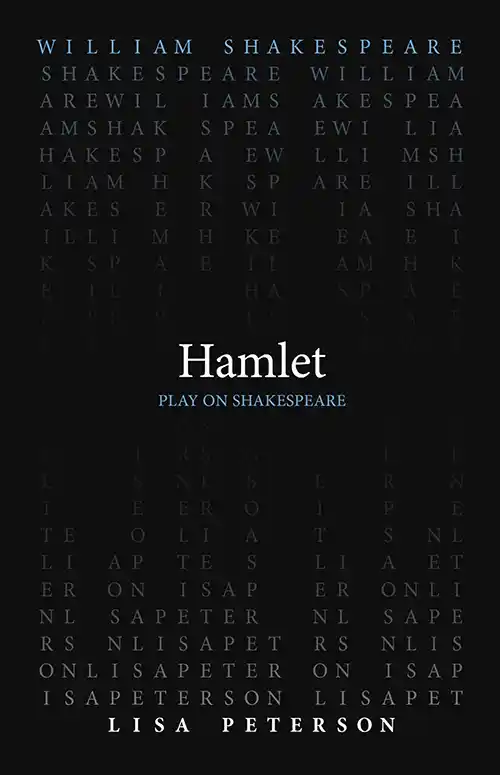
To thine own text be true—Lisa Peterson’s translation of Hamlet into contemporary American English makes the play accessible to new audiences while keeping the soul of Shakespeare’s writing intact.
Lovers of Shakespeare’s language take heart: Lisa Peterson’s translation of Hamlet into contemporary American English was guided by the principle of “First, do no harm.” Leaving the most famous parts of Hamlet untouched, Peterson untied the language knots that can make the rest of the play difficult to understand in a single theatrical viewing. Peterson’s translation makes Hamlet accessible to new audiences, drawing out its timeless themes while helping to contextualize "To be, or not to be: that is the question," and “Something is rotten in the state of Denmark,” so that contemporary audiences can feel their full weight.